Paradise Valley is only a few miles across, but a house tucked into Mummy Mountain can live very differently from a flat one-acre property a few streets away. The map gets you into town, but it won’t tell you which version of it you’re looking at.
THE SHORT ANSWER
What are the main areas of Paradise Valley?
Paradise Valley does not break neatly into official neighborhood districts, so I find it more useful to think about it through four loose geographic lenses: the Camelback Mountain foothills, Mummy Mountain, the flatter central and northern parts of town, and the Lincoln Drive resort corridor.
Those aren’t hard boundaries, just a way to understand why the experience of a property can change so much within a relatively small town. Elevation, orientation, road exposure, mature landscaping, privacy and where the mountain view actually lands on the property can matter every bit as much as the address.
FIRST, A USEFUL DISTINCTION
Paradise Valley is not a collection of tidy neighborhoods.
There are named subdivisions and gated communities all over Paradise Valley, and knowing them matters, but that is only one way to read the town. The geography is too important to ignore.
Camelback Mountain defines much of the southern edge. Mummy Mountain rises through the middle. Between and around them are broad stretches of flatter residential land, while Lincoln Drive runs through a concentration of resorts and resort-adjacent residences. Even the Town’s planning documents talk about the relationship between its hillside and flatland areas as part of Paradise Valley’s character.1
Most of the town also follows the one-acre residential pattern Paradise Valley is known for.2 That sounds like it should make the housing fairly easy to categorize. It does not.
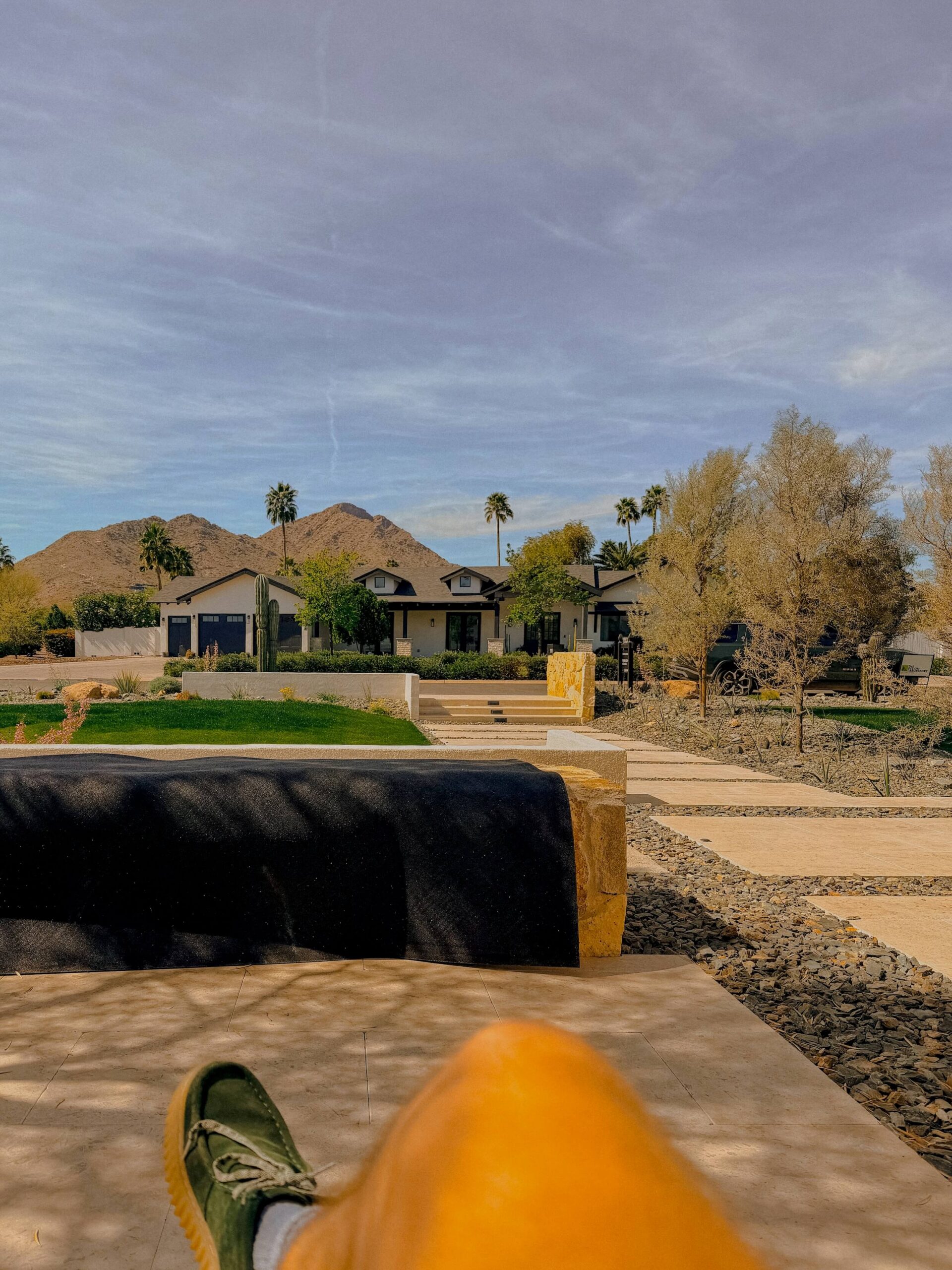
You can look at two homes with similar acreage and similar square footage and have almost nothing else about them feel the same. One sits above the city at the end of a winding road. Another has a flat backyard with Mummy Mountain filling the view behind the pool. Another puts you close to the resorts and Scottsdale Road, which can be useful if you are coming in and out of town.
So before getting too attached to a particular pocket, I like to know how the house is actually going to be used. Primary residence? Arizona base? A place built around entertaining? Do you want land you can spread out on, or would you happily trade some of that for elevation and a ridiculous view? The answers start narrowing the map pretty quickly.
01 / CAMELBACK MOUNTAIN
The mountain can become part of the house.
The Camelback foothills are probably the most obvious example of why it is hard to talk about Paradise Valley as one uniform place. Get up against the mountain and the terrain starts making decisions for you. It affects the approach to the house, the driveway, the architecture, what you see from inside and, in some cases, how much truly flat ground you have once you get there.
The city views can be incredible. The part I would pay just as much attention to is orientation, because the north, south, east and west sides do not experience light in the same way throughout the day or throughout the year. If you know you will mostly use the house in winter, or you picture yourself outside every evening, that is worth thinking through while you are standing there rather than after you have bought it.
Access can be a little adventurous too. There are homes reached by roads that wind their way up the mountain and driveways that are steeper than they looked in the photos. A flatter site up here is prized for a lot of reasons, and if there are low-clearance or high-performance cars involved, driveway grade can go from a minor detail to a fairly important one.
What I love most as you get closer to Camelback, though, is the way the mountain can stop feeling like a view and start feeling like part of the house. Rock and slope come right up to the architecture. You catch pieces of the mountain through windows instead of seeing it only as something off in the distance. When it is done well, the house feels like it belongs to the site rather than having simply been placed on it.
02 / MUMMY MOUNTAIN
Mummy Mountain changes depending on which side you are on.
Mummy Mountain sits right through the middle of Paradise Valley, and I would not describe living around it as one single experience. You can be tucked into the mountain, perched above the Valley on it, or sitting on a large flat lot looking back at it. All three can have a Mummy Mountain address and feel completely different.
In between Mummy Mountain Park and Egyptian Hills, there are stretches where you settle back into the V of the mountain and suddenly feel much farther removed than you really are. The roads wind in, the mountain rises around you and it can get remarkably quiet.
Up around Quartz Mountain Road, the experience opens back up. These are hillside properties,3 and some of the views across the Valley are enormous. You are dealing with slope and access again, but you are also getting the kind of elevation that is difficult to replicate anywhere else in town.
Cross to the north side of Lincoln and you can get almost the opposite setup: large, flatter lots with Mummy Mountain sitting behind them. I like this part of the conversation because someone may tell me they want “the mountain,” when what they really mean is that they want to look at it. You do not necessarily have to live on the slope to have it dominate the view.
03 / THE FLATLANDS
There are plenty of one-acre lots here. They are absolutely not all the same acre.
This is where the details that barely register on a listing sheet start to matter quite a bit, and the first thing I want to know is what the property backs to. Mockingbird is one of the Town’s collector streets, and roads such as Mockingbird and Invergordon can carry more activity than the quiet residential streets feeding into them.4 A beautiful backyard can still sound different depending on what is on the other side of the wall.
Then I want to know which direction the house is facing and, more specifically, where the view actually shows up. A property may technically have views of Camelback or Mummy Mountain, but if the mountain is sitting behind the pool and filling the windows of the main living spaces, you live with that view.
The landscaping deserves more credit than it gets too. A lot of older flat lots have been scraped as new homes replace what was there before them, and mature hedges and trees are not something you can recreate by writing a bigger landscape check at closing. You can plant them, of course, and then you wait.
When a property already has that green privacy around it, especially the kind that has been growing for years, I consider it part of the value of the lot. The same goes for setbacks, driveway placement and the relationship to neighboring homes. This is why I would never reduce the flatlands to “you get an acre.” The shape and position of that acre matter a lot.
04 / LINCOLN + THE RESORT CORRIDOR
This is the part of Paradise Valley where convenience gets a bigger vote.
Lincoln Drive has a different energy from the quieter interior streets, and for some buyers the convenience is a big part of the appeal.
The Town identifies Lincoln as one of Paradise Valley’s visually significant corridors, and several of its best-known resorts sit directly on it, including Camelback Inn, Mountain Shadows and Omni Montelucia. Sanctuary is just south on McDonald.56 Restaurants, spas and the Scottsdale side of town are close, and there is simply more going on around you.
For a pied-à-terre or an Arizona home where the plan is to arrive, lock the door behind you and have a lot within easy reach, that can be a very good trade. You will also find condos, villas and smaller-lot residential options around this part of town that feel quite different from the classic one-acre Paradise Valley estate.
Elevation can make this area interesting too. Some residences manage to sit above the activity enough that you get a sense of removal without giving up the convenience below. Other locations feel much more connected to the movement along Lincoln. I would want to experience both before deciding which version suits you.
And yes, it can get busy, which is part of the bargain here. You’re usually choosing convenience over the feeling of being miles away from everything.
ANOTHER LAYER
There is old Paradise Valley and new Paradise Valley mixed through all of it.
I would not draw this one on the map because it is happening in pockets all over town. Some streets still have a strong older Paradise Valley character, with Spanish and Santa Barbara-style homes, courtyards, mature gardens and houses that have had decades to settle into their lots. Then you turn a corner and contemporary builds are steadily replacing the older housing stock. Bigger glass, cleaner lines, different landscaping and often a completely different relationship between the house and the street.
There are also classic named communities that have their own identity. Cheney Estates and Finisterre are two examples, and both appear among the gated communities identified by the Town.7 You will run into plenty of other named enclaves as you move around Paradise Valley, but I would not assume the subdivision name tells you everything you need to know about the property.
The neighboring houses matter. So does what has already been rebuilt on the street, how established the landscaping is, and what the immediate pocket feels like when you actually drive through it. This is one of those places where knowing the homes themselves is every bit as useful as knowing the map.
THE THING I WOULD NOT ASSUME
Paradise Valley does not automatically mean private.
This surprises people, and I understand why. Paradise Valley was built around low-density residential development and is still predominantly a one-acre residential community.2 It is very easy to translate that in your head to “private estate.”
Sometimes it is. Sometimes an $8 million house still has traffic noise behind it or a sightline you wish it did not have.
People spend a lot of time and money creating privacy here. Mature hedges can make a home almost disappear from the street. The right setback, elevation and placement of the house can do the same thing. On another property, a neighboring second story may look directly into the backyard, or the house may be much more visible to passing cars and looky-loos than the listing photos suggest.
This is one of the things I am particularly careful about in Paradise Valley because you cannot tell the whole story from aerial photos or lot size. You have to stand in the backyard. Look back toward the street. Look at the neighboring rooflines. Walk through the rooms with the curtains open. And honestly, sometimes you need to be there at a different time of day too.
AT A GLANCE
How the four areas differ
| Area | What changes | What I pay attention to |
|---|---|---|
| Camelback foothills | Elevation, city views, dramatic terrain and hillside access | Orientation, seasonal light, driveway grade, usable outdoor space and how the house meets the mountain |
| Mummy Mountain | You can be tucked into the mountain, above the Valley or on flatter ground looking back at it | Which side of the mountain, sightlines, road approach, slope and where the views open up |
| Flatlands | More usable level ground with a mix of established estates and newer construction | Road exposure, backyard orientation, mature landscaping, setbacks and neighboring properties |
| Lincoln + resort corridor | More activity, more convenience and a broader mix of residential formats | Proximity, road activity, elevation, lock-and-leave potential and the relationship to nearby resorts |
THE BETTER QUESTION
How are you actually going to live in the house?
That is usually where I start. If this is one of several homes and what you really want is a tucked-away Arizona place to land, you may care very little about having a giant flat backyard, guest house or every possible amenity on the lot. Maybe the view wins. Maybe being close to the resorts wins. Maybe you want to shut the door and leave without thinking about an acre of property while you are gone.
A primary residence can send the search in another direction. You may want more usable outdoor space, a yard that can handle the way you spend your days, or a layout that makes the flatlands feel more natural. Someone else may want the exact opposite: a show-stopping house for entertaining where the arrival, architecture and view are allowed to be a little grandiose, eccentric and fun.
Any of those can be the right way to buy in Paradise Valley, and each one leads you toward a pretty different set of properties.
That is why I think the town makes much more sense once you stop asking which part is “best.” Tell me what you want your day to look like in the house. Tell me what you want to see when you open the doors in the morning, whether you care about being close to dinner, how much property you actually want to maintain and how private you expect private to feel. From there, Paradise Valley starts getting surprisingly specific.
LOOKING IN PARADISE VALLEY?
The best way to understand the differences is a joy ride.
Tell me how you want to use the home, what you care about seeing when you look outside and what you would rather not compromise on. We can narrow the map from there.
PARADISE VALLEY FAQ
Questions about the different parts of Paradise Valley
Does Paradise Valley have distinct neighborhoods?
Paradise Valley has many named subdivisions and gated communities, but the town does not break into a simple set of official neighborhood districts. Geography is often a more useful starting point. Camelback Mountain, Mummy Mountain, the flatter residential areas and the Lincoln Drive resort corridor can create very different property experiences within a relatively small area.
What is the difference between hillside and flatland homes in Paradise Valley?
Hillside properties can offer elevation, broad views and architecture that responds directly to the terrain, while access, slope, orientation and usable level ground become more important considerations. Flatland properties generally offer more level outdoor space, but road exposure, landscaping, privacy and where the mountain views appear can vary considerably from lot to lot.
Are most lots in Paradise Valley at least one acre?
Paradise Valley is predominantly a one-acre residential community, and much of its residential land follows the R-43 zoning pattern. There are exceptions, including smaller-lot districts, legally nonconforming lots and communities developed under different standards.
Which part of Paradise Valley has the best mountain views?
There is not one universal answer. Hillside homes around Camelback and Mummy Mountain can have expansive elevated views, while flatland properties can put the mountains directly behind the backyard. Where the view appears on the property often matters as much as how dramatic it is.
Is every Paradise Valley home private?
No. Paradise Valley is known for low-density residential development, but privacy varies from property to property. Road exposure, neighboring sightlines, elevation, setbacks, gates and mature landscaping can all change how private a home actually feels.
Where are the resort-adjacent homes in Paradise Valley?
Several of Paradise Valley’s major resorts are concentrated along or near Lincoln Drive, including Camelback Inn, Mountain Shadows and Omni Montelucia, with Sanctuary on nearby McDonald Drive. This part of town also includes residential options that can appeal to people who put more weight on convenience and lower-maintenance ownership.
SOURCES + FURTHER READING
Town references used for this guide
- Town of Paradise Valley, 2022 General Plan
- Town of Paradise Valley, General Plan overview
- Town of Paradise Valley, Hummingbird Lane / Quartz Mountain Road reference
- Town of Paradise Valley, Mockingbird Lane Improvements
- Town of Paradise Valley, Visually Significant Corridor Master Plan
- Town of Paradise Valley, Resorts & Spas
- Town of Paradise Valley, Gated Communities Map