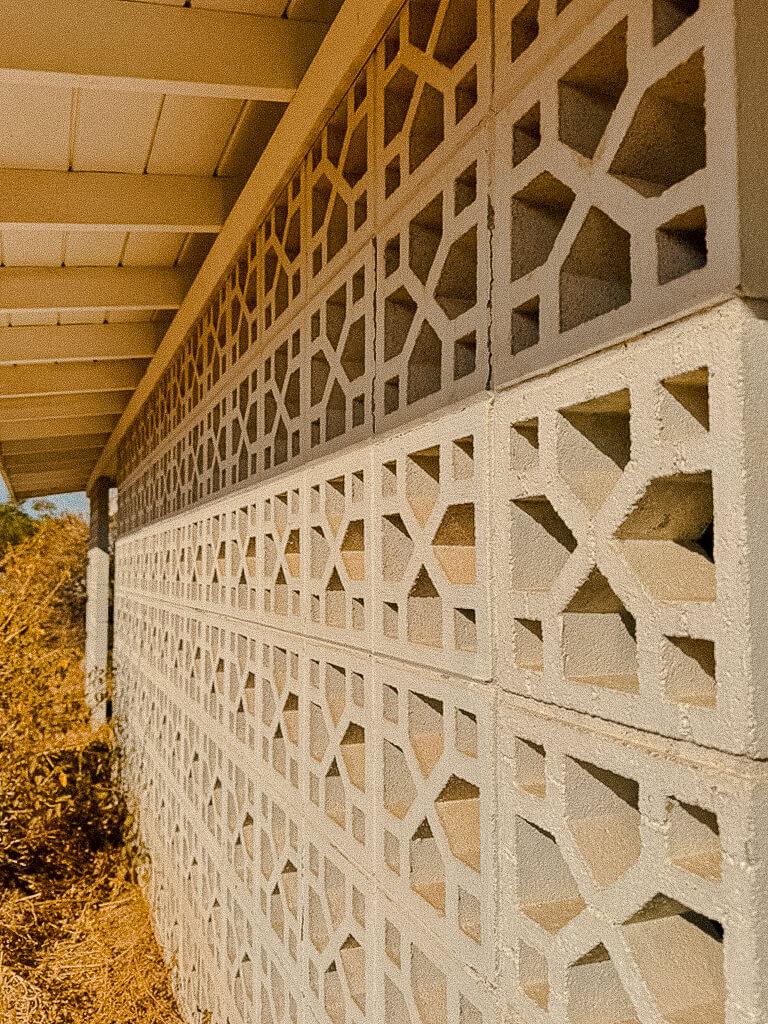
I just love a home with original detail, and nothing pulls at my heartstrings in the Valley quite like a true mid-century modern listing. Give me a breeze-block screen, an unexpected front door, globe lighting, a vaulted ceiling with exposed beams, and windows that catch the light in a way someone clearly thought about.
If you’re looking for one of these homes in Scottsdale, I’d begin around the older neighborhoods near Old Town, especially Town and Country Scottsdale. There are also interesting individual homes in places like Sherwood Heights, and some of Scottsdale’s historic townhouse communities deserve a look. The trick is knowing what you’re looking at. A house built in 1958 might be an original modernist design, a perfectly good ranch house from the same period, or something that’s been remodeled to look vaguely mid-century.
And I always pay attention to what has happened outside. Some older Valley homes have mature landscaping that has had decades to grow around the house and pool. You can really feel how the architecture and lot just have this sort of kismet.
This is my little guide to where I would look and what I’d want to know before buying. It isn’t a live list of every mid-century modern home for sale in Scottsdale because they’re surprisingly hard to filter by in MLS. Listing sites can help with available inventory, but they don’t always tell you whether the architecture is original or what survived the last renovation.
Where to look for mid-century modern homes in Scottsdale
Scottsdale’s postwar building boom left a lot of older housing around the southern part of the city. However, it doesn’t mean every neighborhood from the 1950s is full of modernist architecture. There’s actually quite a spread. I’d definitely separate the places where a specific design history is documented and known from areas where an interesting original house might turn up on its own. Because there are a lot of really fabulous one-offs too, if you know where to look.
Town and Country Scottsdale: Let’s start with the Haver homes
For a lot of enthusiasts, this is the most obvious starting point if your search is specifically for original mid-century modern architecture. Because we love a Haver! Town and Country Scottsdale sits by the southwest corner of North 74th Street and East Oak Street. And officially according to the City of Scottsdale, the 62-house subdivision was designed by architect Ralph Haver and developed in the late 1950s, with four kind of packaged house designs.
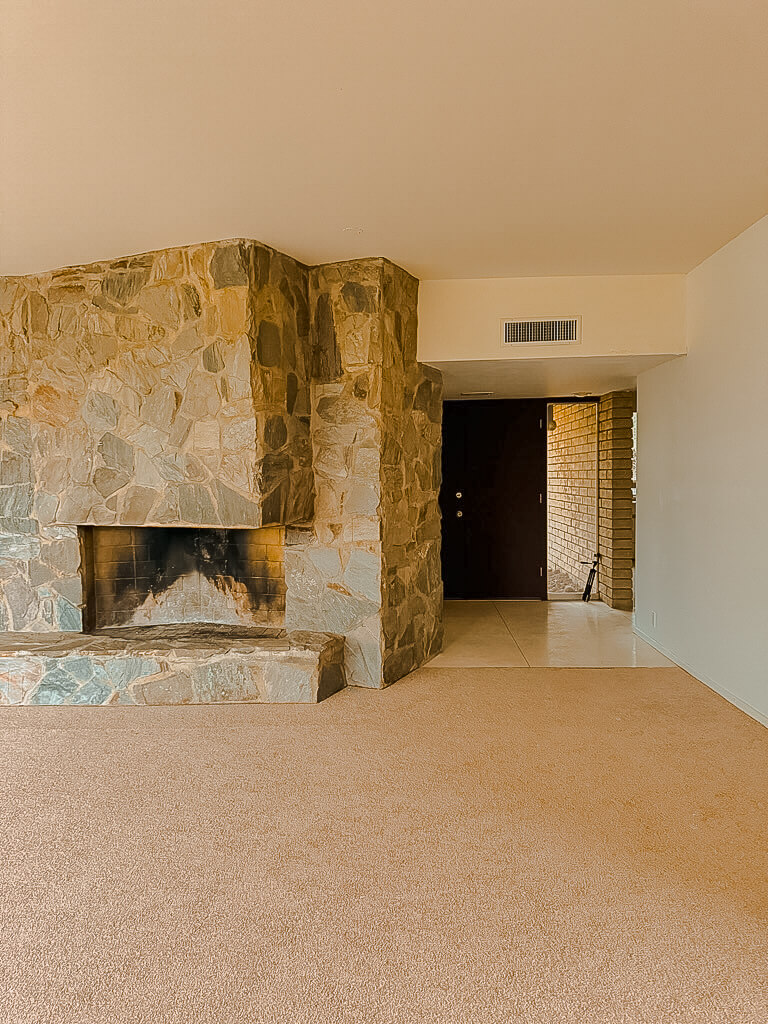
These are the kinds of features I’d hope to find: low-pitched gable roofs, tall walls of glass, clerestory windows (let in the light!) and vaulted interiors. Haver’s swanky and recognizable patio-port design is another feature worth learning to notice. The city documents Town and Country as a historic district, and its preservation guidelines are absolutely good to read and understand if you’re thinking about buying there. Those plans and details are super important because they help you identify a real architectural lineage, even if a listing never mentions Haver.
Sherwood Heights: Individual houses you won’t want to miss
Sherwood Heights is another area I’d keep on your radar, although I definitely wouldn’t describe every house there as mid-century modern. Scottsdale’s neighborhood plan documents building activity from the 1950s into later decades, with some homes designed around the existing topography and vegetation (it’s right near the Papago Peaks and gorgeous!). This is an area we’d want to explore property by property.
I toured one Sherwood Heights house that I still think about. It had a sunken living room and breeze block that framed the Papago peaks when you came through the front door (I was there at golden hour and it was so magical ✨). The windows were huge, practically floor to ceiling, and the light was just gorgeous. The layout was thoughtful and open but still had space to find your little reading corner, which is something I especially liked about it.
As I understood it, the house had only ever had one owner before someone started dismantling it for a new build. A lot of the interior had already been stripped, but the bones were there. And before that, the house had apparently been bright green everywhere, including ceilings and walls. There was still quite a lot of evidence pointing to this which I felt lucky to feel that part of the home’s story. It absolutely needed a modern spin and some TLC so, I wasn’t upset that someone wanted to change it. But, I was thankful the teardown had stopped before the entire house disappeared.
Village Grove: A good place to compare and contrast
Village Grove 1-6 is a designated Scottsdale historic district, associated with Allied Construction’s postwar housing. It’s worth a drive for anyone drawn to established streets and houses of the era, but the designation doesn’t mean every home is a textbook modernist design. Some have more conventional ranch features. I’d look closely at the original roof and window configuration rather than assuming that a 1950s build date automatically loops them into the category of architectural significance. You can peruse district maps and preservation information through Scottsdale’s historic residential program.
Villa Monterey and Sands North: Scottsdale’s townhouse side
If you’re open to something other than a detached house, you have to check out the historic townhouses. Villa Monterey was developed during the 1960s and has a documented association with Ralph Haver and Associates. Sands North, built in the early 1970s, represents a later Southwest Modern direction and is that desert vibe you can picture being so groovy in the days. They have different histories, layouts and exterior forms and some of them can get a little fun and funky, so I’d look at each on its own terms rather than expecting miniature versions of a Haver ranch.
Both are among Scottsdale’s four designated postwar residential historic districts. That makes the city’s maps and district guidelines important when you begin investigating individual properties. You can find the district information through the Historic Preservation Program.
There can also be interesting architect-designed houses outside these recognized districts. But when going to look at these homes, we’d want to verify an individual home’s designer through reliable records before describing it as a Haver, Beadle or another architect’s work. A listing description alone can be tricky and there are also lesser known architects who created some really amazing masterpieces.
The architectural details that speak to my soul
Breeze block is probably one of my favorite details. It can provide a little shade or separation while still letting light and air pass through, was a super practical material (as far as desert building goes) and sometimes it frames a view or casts a shadow in a way that feels almost like artwork. Then there are the vaulted ceilings and post-and-beam details. I really love seeing how a house was put together, especially when the structure becomes part of the room and voice of the space instead of being buried behind drywall.

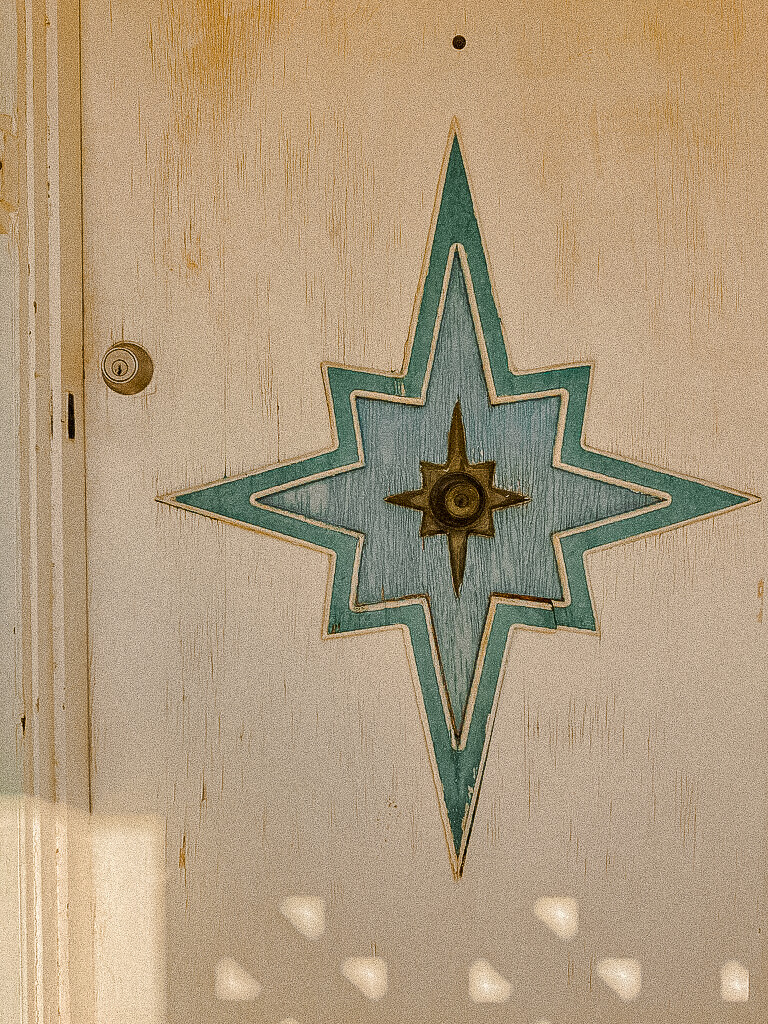
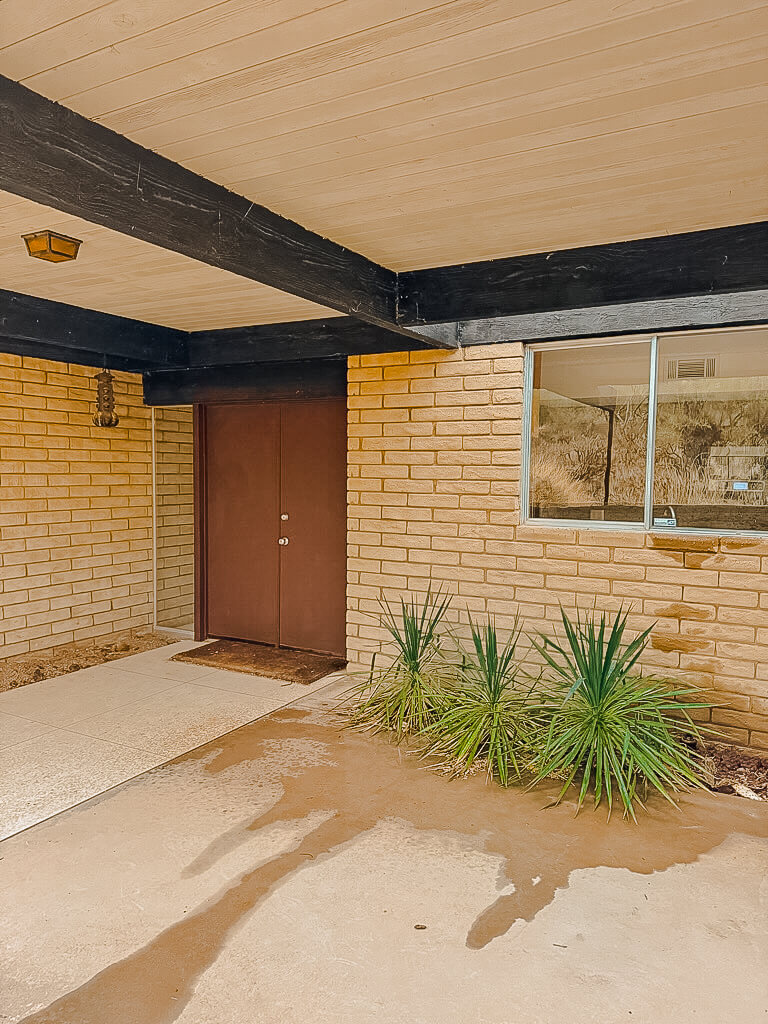
The windows deserve their own attention. Where they sit, how high they go, and where the sun lands during the day can change the whole feeling of a house. I also look for the playful things: an unusually shaped or brightly colored door, original globe lighting, or colors that someone chose with a little confidence. Those details can give a house so much personality.
The outdoor spaces are the other cool part. There’s often a relationship between these houses and their pools, patios and planting that can be really hard to capture or reproduce. Mature trees and shrubs can be a huge part of the feeling, especially when they’ve grown around a home over decades. I love driving through older parts of Scottsdale because you can usually tell the history of a neighborhood by the trees surrounding it.
Original, restored or just mid-century inspired?
These terms often get thrown together in listings, and they can describe very different houses. An original modernist home was designed in the period with the architecture itself in mind. A mid-century-era ranch might share a construction date without having the same design intent. A renovation might preserve the roofline and proportions while replacing almost everything inside. And a new home can borrow breeze block, glass walls and period colors without having any historic connection at all. So, there is really a lot to be explored and checked out!
That doesn’t mean that the good ones are only the untouched time capsule. I’ve seen people find these homes deliberately and turn them into magical, modernized spaces. When a renovation respects the house, I think that’s probably my favorite and a really cool approach. And I’ve seen the other possibility, when someone approaches an older property as a routine flip and removes the details that made it interesting (I, sadly, see this one a lot!).
If I had the time, I’d love to think I’d take an iconic house that needed some work and bring it into modern glory. Then again, there’s also this part of me that thinks it would be really nice to buy one where the work was already done. I’d just want it to be from someone who had a true vision and understood the assignment, lol.
When evaluating a renovation, I’d start by looking past the finishes. Did the new windows retain the original rhythm of the facade? Are the exposed beams genuine or decorative additions? Were original openings enclosed? Did the work preserve the relationship between the main living areas and the yard? Those answers tell you a lot more about a renovation than new finishes will.
What I’d investigate before buying an older modernist home
Some of the details that make these houses appealing also deserve extra attention during due diligence. Original expanses of glass can bring wonderful light, but in Arizona I’d want to understand glazing performance, exterior shade and how the afternoon sun floods into the rooms. Because a lot of these homes’ original windows are single pane glass (aka, your home is an expansive greenhouse!). Low-sloped roofs require careful inspection of drainage, roofing material, repairs and penetrations. Older electrical, plumbing, cooling and insulation systems need evaluation based on the actual property, especially if the home is on an original septic system.
If there’s a pool, you’re going to want a pool inspection and a clear understanding of what’s original versus replaced. Mature landscaping can be wonderful, but tree roots, irrigation history and proximity to the house should all be examined. And when your love of a property has to do with certain original materials, I’d discuss how those features might be repaired before deciding to remove them. Renovations of older buildings may also call for appropriate testing and professional advice about hazardous materials before demolition. In my experience, home searches like these often turn into a “let’s bring the contractor with us” journey.
Historic status is another reason to research the address early. Scottsdale has designated Town and Country, Village Grove, Villa Monterey and Sands North Townhouses as historic residential districts. Depending on the property and proposed work, exterior changes may require review under the applicable district guidelines. Some homes may also qualify for a competitive city exterior-rehabilitation reimbursement program, depending on the eligibility rules and funding; that’s something to check directly with the city, and definitely not assume will offset your renovation budget. Scottsdale explains the program and links to each district’s guidelines here.
For any older home where an addition or major remodel is planned, it’s important to review permits, the existing footprint, setbacks, and whether the proposed work is actually feasible. You might have a beautiful vision or perfected rendering but it’s important to understand what a city will approve or what could be hiding behind the walls.
How to find mid-century modern homes when listings don’t call them that
When I start a search I begin with neighborhoods and the years in which they were developed, then look carefully at actual photographs. A home could be described as a ranch, contemporary, original owner property or simply an older Scottsdale house. Conversely, a listing labeled mid-century modern could be a new build with period-inspired finishes or something as simple as a sputnik chandelier. Searching by keywords alone can miss a lot of possibilities and includes plenty that aren’t what you’re after.
For promising properties, I’d compare exterior photos against the original architectural characteristics documented by the city, look for evidence of additions, and review the recorded build date and relevant permits. If a listing names a notable architect, I’d really love the documentation to back it up. It’s also worth looking at houses that aren’t fully restored yet. Sometimes the room arrangement, roofline and windows are still remarkable even if the photos aren’t especially flattering (if you’re willing to roll your sleeves up a little!).
I would also check the municipality before getting attached to the Scottsdale label. Some terrific Valley modernism is found in Phoenix or Paradise Valley, and some properties with a Scottsdale mailing address aren’t inside Scottsdale city limits. The different parts of Scottsdale are useful to understand before widening a house search.
I do know exceptionally well-executed examples draw attention from buyers. I’ve watched the enthusiasm for homes that someone has carefully brought back to life in showings and saves. I just wouldn’t expect to find that every mid-century property is automatically rare or that every renovation commands a premium (though sometimes they do). The actual architecture, condition, location, and available alternatives still matter a heck of a lot.
Want to see more houses like these?
Not every house I share will be mid-century modern, but they’ll all have something worth looking at.
And if there’s a particular kind of original architecture you’re hoping to find, send me a note. I’d be happy to hear what catches your eye. You can also read more about the city in my Scottsdale area guide.
A few practical questions
Scottsdale mid-century homes, quickly explained
Where are Ralph Haver homes in Scottsdale?
Town and Country Scottsdale, near North 74th Street and East Oak Street, is a documented Ralph Haver subdivision with 62 homes. Other properties may be attributed to Haver, but verify those claims individually.
Is every 1950s Scottsdale ranch house mid-century modern?
No. Mid-century describes a period; mid-century modern describes an architectural approach. Construction date alone doesn’t establish the home’s original design style.
Can you renovate a home in a Scottsdale historic district?
Renovations are possible, but the rules depend on the property and the work proposed. Review the applicable historic-district guidelines and confirm approvals with Scottsdale before planning exterior changes.
How can I find mid-century modern homes for sale in Scottsdale, AZ?
Combine listings with neighborhood-based searches, photos, construction history and city records. Don’t rely entirely on an architectural keyword filter, and verify both the home’s design history and municipality.
Keep exploring