When my husband and I moved back to Arizona, it came down to Cave Creek or Scottsdale. I knew Cave Creek better because I had lived here before and my family was here, but we went back and forth about Scottsdale and whether being a little closer to everything would make more sense.
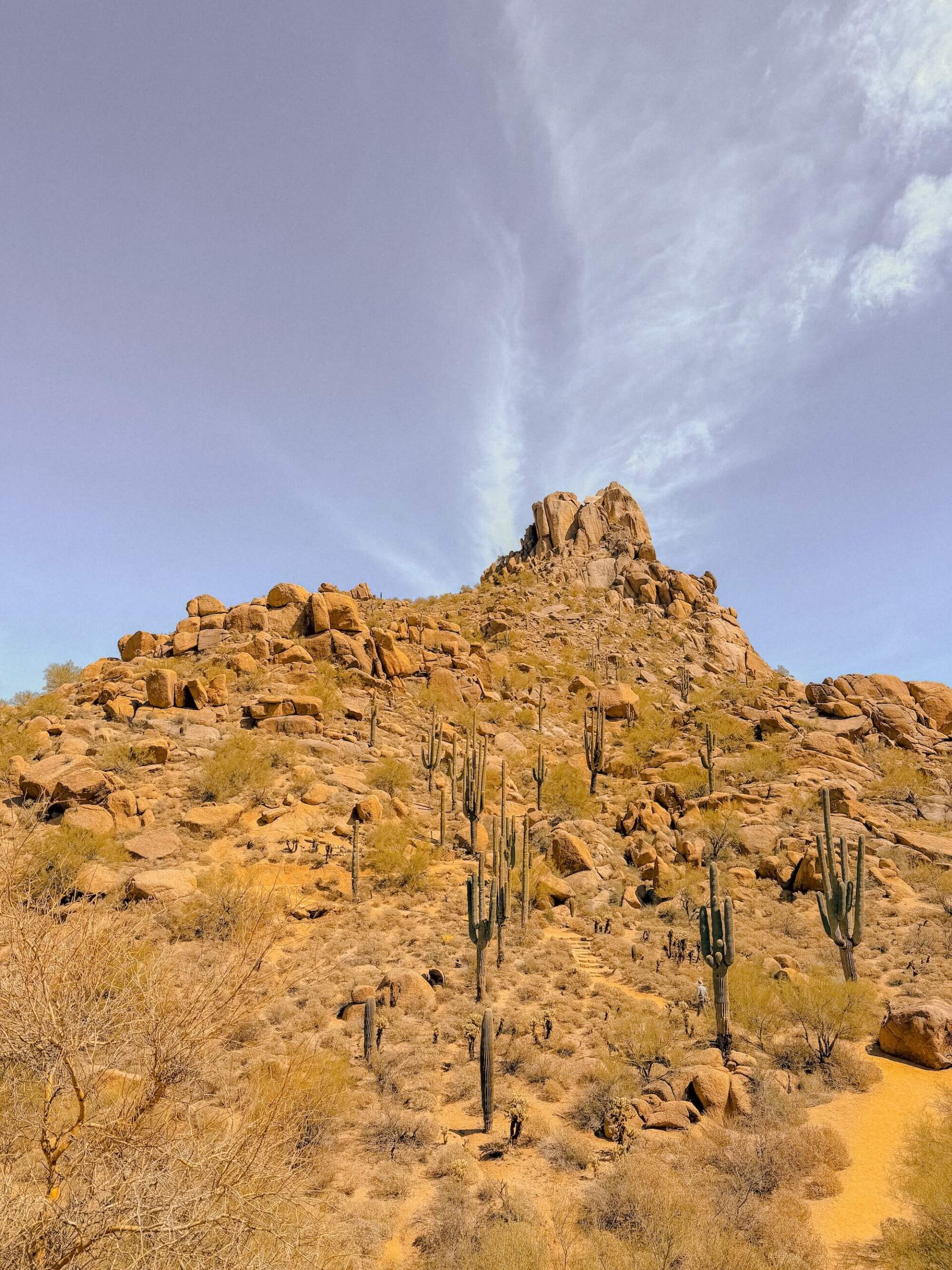
Then we saw a house on a hill surrounded by saguaros, and that was basically it.
We were coming from Boston, and I realized pretty quickly that the last thing I wanted was to move across the country just to feel like we were living in another version of a city. I wanted to be in the desert. I wanted land around me, hills, saguaros outside the windows and those enormous Arizona sunsets that still make me stop what I am doing sometimes. So we picked Cave Creek.
These days, Cave Creek is home, a lot of my work takes me into Paradise Valley, and I am in Scottsdale several times a week for restaurants, meetings and everything else I seem to leave Cave Creek to do.
Which is why, when someone moving here tells me they are choosing between Cave Creek, Paradise Valley and Scottsdale, I do not think there is a useful answer to “Which one is best?” I want to know what they are trying to get more of.
More land? More privacy? More restaurants around the corner? A house with some actual personality? A club community? Mountains outside the window? Enough separation from the city that you can forget it is there? Or maybe you love the desert but still want to be able to get to Fashion Square without packing snacks, lol.
Those answers make the geography much easier.
The short version
Three very different versions of Arizona
| If you want more of… | Start here |
|---|---|
| Desert, acreage and original character | Cave Creek |
| Privacy with a central location | Paradise Valley |
| Choice, amenities and neighborhood variety | Scottsdale |
| A trail closer than a coffee shop | Cave Creek or North Scottsdale |
| Restaurants, airport access and more daily convenience | Central or South Scottsdale, or Paradise Valley |
What Cave Creek, Paradise Valley and Scottsdale actually feel like
Cave Creek is a honky-tonk cowboy town with this artsy-fartsy streak that I think gets missed when people reduce it to horses and Western bars. There are artists, funky shops, handmade things, custom houses that clearly came out of one person’s brain, motorcycles, ranches, old Arizona and plenty of people with money who have absolutely no interest in looking polished about it.
One time I saw a bearded man in a cowboy hat driving down Cave Creek Road in a Rolls Royce convertible, and I still think that may be the most efficient explanation I have for the place.
It can be rustic, but it can also be rustic bougie. There are mom-and-pop businesses, acreage, neighborhoods tucked into saguaro-covered hills and plenty of properties where the land is at least as important as the house. The distance from central Scottsdale and Phoenix is either the compromise you accept to live here or one of the main reasons you picked it. I wrote more about that in my guide to moving to Cave Creek and Carefree.
Paradise Valley is quieter, more private and much more central than people expect. There is no downtown and very little reason to randomly find yourself driving through the town unless you live there, are staying at one of the resorts or know whose driveway you are looking for (or if you’re a self-proclaimed looky-loo!).
A lot of the appeal is the combination that is increasingly hard to find anywhere: significant residential lots, mountain views, privacy and the ability to get into Scottsdale or Phoenix pretty quickly. Camelback and Mummy Mountain shape so much of the town, and the relationship a property has to those mountains can matter almost as much as the house itself.
You can visit Scottsdale. Paradise Valley is harder to “visit” in the same way because a lot of what makes it compelling is behind the hedges, walls and gates.
Scottsdale is the hardest one to describe because it is 31 miles long and changes so much as you drive north that saying “I want Scottsdale” doesn’t say as much as someone relocating here might think. There is a lot to see!
I also think people moving here often have a very specific mental image of Scottsdale that is really this little universe around Old Town, Fashion Square, Camelback Road and the Paradise Valley border. Royal Palms comes up all the time too, even though Royal Palms is actually in Phoenix. That whole pocket is this funny seam where Phoenix, Paradise Valley and Scottsdale start getting mixed together in someone’s head.
Then we drive north and they discover that McCormick Ranch is different from DC Ranch, which is different from Troon, which is different again from Desert Mountain. You can have lakes (manmade, of course) and mature trees, golf and guard gates, newer construction, lock-and-leave living, serious desert or something that feels relatively urban, all while keeping Scottsdale on the address. I break those shifts down in more detail in my guide to South, Central and North Scottsdale. It’s all a lot to take in!
The interesting part is that when someone wants the great house, some privacy and the ability to still be close to everything, proximity tends to get expensive pretty quickly because, who doesn’t want that?
How much do you want close by?
I ask this in some version all the time because it gets us farther than talking about ZIP codes. I lived my first six years in Boston without a car. I walked to work, coffee, the gym, dinner and pretty much everywhere else I needed to go, which was wildly convenient and frankly very good for my physique.
I quickly had to relearn that Arizona is not Boston.
Cave Creek, Paradise Valley and Scottsdale are all largely car-dependent, although the experience changes considerably by neighborhood. The more useful question is what you want within easy reach, what you need to access regularly and how much driving you are comfortable building into your day.
Our first house in Cave Creek was close enough to town that we could walk about 15 minutes to Janey’s or El Encanto, which I loved. Where we live now, I cannot walk to coffee or dinner, but I can walk to a trailhead, and it turns out I like that trade too. There are versions of Cave Creek where you feel connected to the town core and versions where the whole point is that you have land around you and very little immediately outside your front door.
In Paradise Valley, I would generally remove walking to coffee or dinner from the wish list. Most residential areas are low-density and separated from commercial destinations, so everyday errands usually involve a drive. What you get in return is that Paradise Valley can feel remarkably tucked away while still sitting right in the middle of everything. If you travel often, go out in Scottsdale all the time or have parts of your life spread across Phoenix, that centrality starts to matter.
Scottsdale has the widest range. Old Town offers the greatest concentration of restaurants, shops and services within a relatively compact area. Parts of McCormick Ranch connect to paths, parks, lakes and restaurants, and DC Ranch has Market Street. The exact address still matters because many Scottsdale neighborhoods require a drive for most errands.
This is where I think people underestimate drive time. A house can look “close to Scottsdale” on a map and still change your daily life quite a bit depending on which part of Scottsdale you mean. So before buying, I want to know where you are actually going. Sky Harbor? Scottsdale Airport? An office downtown? Dinner around Camelback and Scottsdale Road? Golf at Desert Mountain? Someone you are visiting in the southeast Valley?
The beautiful house does not move closer after closing.
What your money actually buys in Cave Creek, Paradise Valley and Scottsdale
This is where the three markets get really interesting because the same budget can be buying three completely different things. Say you show up with $3 million.
In Cave Creek, that is a significant budget. Depending on where we look, we can be talking about newer construction in a planned community, a custom home with acreage, a horse property or one of those places where you walk outside and realize the land may be the thing you are actually falling in love with.
Cave Creek also has some of my favorite housing oddballs. Desert contemporary, adobe influence, territorial homes, ranches, newer builds, old custom houses with original tile or unusual floor plans, homes tucked into boulders and hillsides. Sometimes the house is fabulous. Sometimes the five acres and the view are fabulous and the kitchen is asking for a little help. I can work with that.
In Paradise Valley, $3 million can be a very different conversation because the scarce thing is not simply “an expensive house.” It is the right combination of land, location, privacy, architecture, view and condition.
I have seen this surprise buyers coming from very expensive markets more than once. They arrive with what is objectively a large cash budget and, where they are coming from, that number has meant they can pretty much get what they want. Then they start looking in Paradise Valley and are floored by how competitive the truly good properties can still be. A big budget gives you options here. It does not make the compromises disappear.
Around that $3 million mark, patio homes, condos and lock-and-leave properties become part of the conversation, and detached houses can require more flexibility around location, condition, lot or what you are willing to do after closing. Move the budget up and the options expand, of course, but that basic scarcity remains because there is only so much land in Paradise Valley and the best sites are not being created again.
In Scottsdale, $3 million can buy an almost comically wide range of things. Closer to Old Town and through central Scottsdale it can take you very far. Move north into communities like DC Ranch, Silverleaf, Troon or Desert Mountain and suddenly the same money may be buying a smaller house, a particular homesite, newer construction, club access, mountain views or the convenience of a lock-and-leave property.
That is why Scottsdale’s citywide statistics require a giant asterisk in my brain. For a current snapshot, the three-month median sale prices through August 2026 were approximately $1.22 million in Cave Creek, $4.30 million in Paradise Valley and $907,000 in Scottsdale. Those numbers are useful context, but especially in Scottsdale they tell you very little about what a particular $3 million search is actually going to feel like.
The houses themselves are part of the choice
This matters to me because I am a house person before I am a market-statistics person. In Cave Creek, I love how many homes feel like someone had an idea. They may not all be ideas I personally would have had, but I will take a house with something going on over another room full of gray tile any day.
Paradise Valley is fascinating because the best house and the best property are not necessarily the same listing. You can find an older ranch house sitting on an absolutely ridiculous acre, a significant architectural home that someone has preserved beautifully, a hillside house designed around one specific view or enormous new construction where every decision was made recently. Sometimes the real value is the house. Sometimes it is the dirt, the view or the way the house sits on it.
Scottsdale gives you the broadest mix, from older ranch and midcentury influence farther south, through established neighborhoods with mature landscaping in the middle, to newer master-planned and golf communities as you head north. So if you care about original details, bold color, mature landscaping, a great old floor plan or a house that does not look like every other house on the market, tell me. That changes where I look.
Casa Blanca in Paradise Valley
Summer changes the equation more than people think
Here is the Arizona part that no amount of beautiful January house hunting can adequately explain. Summer is hot everywhere.
Cave Creek’s elevation can make it a few degrees cooler than lower parts of the Valley, but when it is 110 degrees I promise the conversation does not become, “Thank goodness it is only 107 here.” The pavers get hot. Artificial turf gets hot. Your car gets ridiculous. The pool eventually warms up enough that you begin questioning its commitment to the job. A west-facing wall of glass that looked spectacular during a winter sunset starts asking something different of the house in July.
You adjust. You do things earlier. You discover remote start is less of a feature and more of a human right. You learn which parts of your yard still have shade at 4 p.m. and begin appreciating a giant mature tree in an almost spiritual way. Plenty of people also decide they simply do not want to be here for all of it.
A friend of mine moved from San Diego into a wildly gorgeous Arizona house and told her husband she did not want to spend the summers here. He pointed out that lots of people live here all summer, and her basic response was, “Sure, but if we do not have to, why would we?”
Which made me laugh because, well, exactly.
I have heard some version of that summer-escape plan from plenty of people. Sometimes it becomes Flagstaff, Forest Highlands or Pinetop. Sometimes it is San Diego, Idaho, Montana or wherever else they already love. Sometimes they rent somewhere for six weeks and call it good.
That is why I tell people moving from a more expensive market not to automatically spend the entire difference on the Arizona house. Leave room for July.
Summer also changes the outdoor-life conversation. Cave Creek gives you Black Mountain and Spur Cross, Paradise Valley gives you Camelback right there, and Scottsdale has the McDowell Sonoran Preserve, with more than 30,500 acres and over 230 miles of trails. But the calendar is different than Denver or the Pacific Northwest. On Extreme Heat Warning days, Phoenix restricts access to Camelback’s Echo Canyon and Cholla trails and the Piestewa Peak trails from 8 a.m. to 5 p.m. The City of Phoenix posts the current restrictions here.
You do not give up outdoor life. You just become very familiar with sunrise.
The landscape changes too
If you are coming from Seattle or Portland, you are going to miss green. I am not going to try to sell you on a cactus being basically the same thing as a Douglas fir because it is not. What surprised me after coming back from the East Coast was how much I started noticing the different kinds of green here.
Cave Creek feels the most naturally desert-forward to me. The hills, washes, saguaros and open desert are a huge part of why I chose it. There is also this funny contrast at places like Jewel of the Creek near Spur Cross, where you can hike down into cottonwoods and sometimes running water and briefly wonder where the desert went.
Paradise Valley can be extraordinarily lush because there are properties where the landscaping has had decades to mature. Big trees, citrus, hedges and gardens can almost swallow a house, although that look obviously comes with water, irrigation and maintenance behind it.
Scottsdale gives you both extremes. McCormick Ranch and parts of central Scottsdale can feel surprisingly green, with mature trees, lakes and the Indian Bend Wash Greenbelt. Drive north and the desert starts asserting itself again.
Mature landscaping is one of those things I think people undervalue when they are comparing houses on paper. You can remodel a bathroom in six weeks. You cannot order a 40-year-old olive tree for Tuesday.
The details you end up living with
This is probably the part of a house hunt that interests me most, because the detail you overlook while falling in love with a house has a funny way of becoming the thing you talk about six months later.
The land is not always as simple as the acreage number
In Cave Creek, two acres does not automatically mean two acres you can use however you want. The town has specific rules covering grading, hillsides and washes, which can affect where and how a property can be disturbed or developed.
So if your fantasy involves a guest house, horses, a giant yard, a sport court or whatever else you have decided you are finally going to have room for, we should understand the actual property before mentally placing all of it.
Paradise Valley has its own hillside review process. Its Hillside Building Committee reviews things including land disturbance, heights, materials, grading and drainage on affected properties. That does not mean hillside properties are a problem. Some of the most fabulous houses in the Valley are sitting on them. It means the mountain is part of the property, and sometimes it gets a vote.
In all three markets, especially once we get into custom homes and larger lots, I want to understand access, utilities, drainage and shared-driveway easements rather than assuming the parcel map tells the whole story.
Wells, septic and all the glamorous stuff
My last two houses have been on septic, and it really is not dramatically different from sewer in daily life. You are a little more thoughtful about what goes down the drain, you maintain it, and occasionally a company comes to your house to do something I do not think anyone needs described in detail over lunch.
People sometimes think wells and septic are Cave Creek things. They are not. You can encounter them in pockets of Cave Creek, Paradise Valley and Scottsdale, so I ask rather than assuming. Same with water provider, irrigation, HVAC age, pool equipment, roof condition, water softening, drainage and where the afternoon sun actually hits the house.
There is a lot I can forgive in a house if it has good bones and something I love. I just want us to know what we are forgiving.
Orientation and landscaping deserve more credit than they get
Arizona makes orientation matter. A garage taking the brunt of afternoon sun, a primary bedroom with a wall of west-facing glass or a backyard with no shade can feel very different in June than it did during your February showing.
The same is true of landscaping. Mature trees and established desert plants are not just pretty. They change shade, privacy and how the property feels during the hottest part of the year. That does not mean every great house needs to face a particular direction or be buried in landscaping. It means I want to notice it before we buy.
Then there are the rules around the house
If short-term rental flexibility matters, check the actual address and the current rules rather than relying on what somebody remembers from a few years ago. Paradise Valley, for example, currently requires an STR permit along with other registration requirements.
Property taxes need the same nuance. Paradise Valley does not assess its own primary or secondary municipal property tax, but that very much does not mean residents pay no property taxes because county, school and other applicable levies remain. The town explains that distinction in its resident guide.
Schools do not neatly follow the city name printed on the listing, either. If that matters to your move, verify the district and current enrollment options for the exact address instead of assuming “Paradise Valley” means one district or “Scottsdale” means another.
There are a lot of details here, but this is also why I do not think the job is simply finding the prettiest house that matches the search filters. Most of the things above are completely manageable once you know they exist. I would just rather know.
Where life actually happens once you move
This one is harder to quantify, but when someone is relocating and does not already have a giant social circle waiting for them, I think about it.
In Cave Creek, life is small-town enough that repetition works. Go to the same restaurants, trails, coffee shops, bars, local events or stores and you start seeing the same people. There is a real artsy, independent streak here too, which is part of why the town has always felt more layered to me than the cowboy branding suggests. It is not polished in the Scottsdale sense, but there is plenty going on if you like places with personality.
In Paradise Valley, the social life is less visible because there is no town center where everybody keeps bumping into one another. It tends to happen through existing circles, clubs, schools, nonprofit work, fitness, resorts and introductions from other people. You can live an extremely social life in Paradise Valley, but the geography itself is not doing the introducing for you.
Scottsdale depends, again, on which Scottsdale you bought. Central Scottsdale puts restaurants, fitness studios, parks, the Greenbelt and daily errands into a smaller radius. Far North Scottsdale communities can have their own social ecosystems through the club, golf and neighborhood events.
A few locals making their way through Mirabel
If someone is moving here without knowing many people, I think there is a useful question underneath all of this: Which places and routines will naturally bring you back into the community? A fabulous house can still feel isolating if the rest of your life is happening somewhere else.
What I have learned watching people choose
The relocation decisions I have seen age the worst usually happened when somebody tried to solve Arizona in one frantic house-hunting weekend. They found a house before they really figured out where they wanted their life to happen.
The people who seem happiest with the decision usually gave themselves enough room to wander a little. They drove around without a showing scheduled. They stopped for lunch. They went into the grocery store. They drove from the neighborhood to somewhere they knew they would actually visit. They looked at a place that had not originally made the spreadsheet.
Somewhere in there, the vague search filters usually get more specific. “I want privacy” becomes “I want enough land that I do not really see the neighbor.” “I want Scottsdale” becomes “I want to be north enough for more desert, but I do not want dinner to be half an hour away.” “I want acreage” becomes “I want a trail outside my door, but I absolutely do not want to maintain five acres.” “I want Paradise Valley” becomes “I care more about the lot and privacy than having a brand-new kitchen.”
That is when the house hunt gets good, because we are looking for your version of Arizona instead of the version you thought you were supposed to want before you got here.
So if you are deciding among Cave Creek, Paradise Valley and Scottsdale from another state, my advice is to come out before you make the call and give yourself a little time. Stay in the different areas. Drive the route you would actually drive. Go to lunch. Go to the grocery store. Look at houses, obviously, but pay attention to everything between the houses too.
And if you want company for the drive, that is one of my favorite parts of the job. We can go look at fabulous houses, but we can also figure out which version of Arizona you actually want to come home to.
Making a move?
Tell me what you want more of.
If you are deciding between Cave Creek, Paradise Valley and Scottsdale, we can start with the life you want and work backward to the right house.
Related: The different areas of Scottsdale · Moving to Cave Creek and Carefree · The Scottsdale Greenbelt
Quick answers
What is the biggest difference between Cave Creek, Paradise Valley and Scottsdale?
Cave Creek gives you the strongest sense of living out in the desert, with more opportunities for acreage, individuality and distance from the center of the Valley. Paradise Valley combines significant residential lots and privacy with a surprisingly central location. Scottsdale gives you the widest variety of housing, amenities and neighborhood types, which is also why saying “I want Scottsdale” usually requires a few more questions.
Which is the most expensive?
Paradise Valley is considerably more expensive on a townwide basis. In the three months ending August 2026, the median sale prices reported by Redfin were approximately $1.22 million in Cave Creek, $4.30 million in Paradise Valley and $907,000 in Scottsdale. These are broad, time-specific market snapshots, not a prediction of what a particular house should cost.
What does $3 million buy in Cave Creek, Paradise Valley and Scottsdale?
In Cave Creek, $3 million can put substantial custom homes, acreage and newer construction in play. In Paradise Valley, that budget usually requires more decisions about lot, condition, location or property type because the town’s land is scarce and overall pricing is much higher. In Scottsdale, the answer changes dramatically by neighborhood, with the same $3 million behaving very differently in central Scottsdale than it does in communities such as Silverleaf or Desert Mountain.
Is Cave Creek cooler than Paradise Valley and Scottsdale in summer?
Cave Creek’s higher elevation can make it a few degrees cooler than lower parts of the Valley, but all three experience very hot summers and the practical difference can feel small during the hottest weather. House orientation, shade, mature landscaping, HVAC performance and what you personally do during July and August matter more to me than relying on a few degrees of temperature difference.
Can you live in Cave Creek, Paradise Valley or Scottsdale without a car?
For most residents, daily errands are easier with a car. Certain pockets of Cave Creek and Scottsdale place restaurants, coffee, parks or trails within walking distance, while Paradise Valley’s low-density residential pattern separates most homes from commercial destinations. If car-free living is important to you, map the exact address against transit, sidewalks and the places you expect to use regularly rather than relying on the city name.
Is Paradise Valley part of Scottsdale?
No. Paradise Valley is its own incorporated town. It was incorporated in 1961, covers about 15.4 square miles and remains predominantly zoned for single-family housing.
Which one is best for privacy?
All three can offer excellent privacy, but the form changes. Cave Creek can give you physical distance and acreage. Paradise Valley often combines large lots with walls, mature landscaping and thoughtful siting. North Scottsdale may offer privacy through gated communities, larger homesites or preserve adjacency. I would start by defining what you mean by privacy before choosing the town.
Which one has the best access to hiking?
All three have strong outdoor access. Cave Creek has Black Mountain and Spur Cross, Paradise Valley sits against Camelback Mountain, and Scottsdale has the McDowell Sonoran Preserve. The better question is which trails you would actually use and whether you want to drive to them or have the desert become part of your immediate neighborhood.
Madison Wetter is a REALTOR® with Realty ONE Group serving Cave Creek, Paradise Valley and Scottsdale. He advises buyers and sellers of residential real estate, with a focus on relocations and distinctive properties. More about Madison.